
Duck à L'Orange
A DOUBLE REVIEW of a classic Ibsen and a bold new play

In the space of just over a week, I’ve seen two plays, one old and classic, the other new and experimental. In the first, a wounded duck, kept in an attic, sustains the emotional needs of a teenage girl in a family plagued by secrets, uncertain parentage, and contingent love. In the second, a dead or injured creature found on a road, resembling a lamb but seemingly winged, kept in a bag in a refrigerator, sustains the spiritual yearnings of a teenage girl in a friend group beset by jealousy, abuse, and a dead or absent father. The duck and the strange creature (named "Agnavis"—angus is Latin for "lamb"—by the girl, whose stepmother's surname is Cordero, “Lamb” in Spanish) take on a symbolic if not religious significance, leading in each case to a sacrificial impulse, which, despite the presence of the animal, must in the end be human.
Then, there are the differences; synchronicity is never total. The classic, Ibsen's Wild Duck, is a huge play, magisterial in its dramaturgy, weighted with historical significance. It is performed in a big house, the Polansky Shakespeare Center at Theatre for a New Audience, which was packed when I saw it. The new play, Blood Orange by Abigail Duclos, would not be out of place in an anthology of writers like Shepard and Fornes, who may or may not acquire the weight of an Ibsen over time. It is acted by Et Alia Theater in an intimate house, the Gural Theatre at A.R.T./New York Theatres, which wasn't full on either night I attended (Blood Orange has multiple casts, The Wild Duck one). It plunges in and never lets up; The Wild Duck proceeds in fits and starts (the first scene has some of the laziest "naturalistic" acting I've ever seen) but gathers strength and concludes powerfully. Blood Orange is pared to the essence (even cutting a character from the script as written); the director Simon Godwin burdens The Wild Duck with superfluous folk musicians (as was done to last year's pointless but well-acted Enemy of the People at Circle in the Square). The Wild Duck is well worth seeing; Blood Orange ought not to be missed.
Et Alia Theater are four young international women who understand each other so well that not only could they finish each other's sentences, they literally speak each other's lines, trading off roles in multiple casts for the plays they do. In Blood Orange, they play teenagers still in school, leveraging the mannerisms of youth just enough to be convincing, at the same time adding a touch of humor by highlighting the impersonation. It's pretty brilliant. But the emotions are deadly serious; the girls have faced loss and abuse but have yet to face their awakenings as sexual beings. There is talk of boys, but their deepest attractions are to each other, and friendship and sex are not always separable in the adolescent world; as there are three, there is jealousy. And they speak not just of boys, but of men, a teacher and fathers; one may have been murdered, or maybe he just left. Among themselves they talk of violence (there's a gun somewhere and a knife in the kitchen); the show starts by one demanding of another to be punched hard in the torso, repeatedly. Strong stuff that grabs. In the culmination of the drama, a harrowing act of collective bodily performance surfaces the incipient violence of the play's hard-to-take realities. It is, under Vernice Miller's direction (choreography by Amelia Rose Estrada), the breaking of a dam holding back a history of repressed desire. And then there is the sacralized roadkill that precipitates the final offering, as real as a murdered pet or a slaughtered lamb.
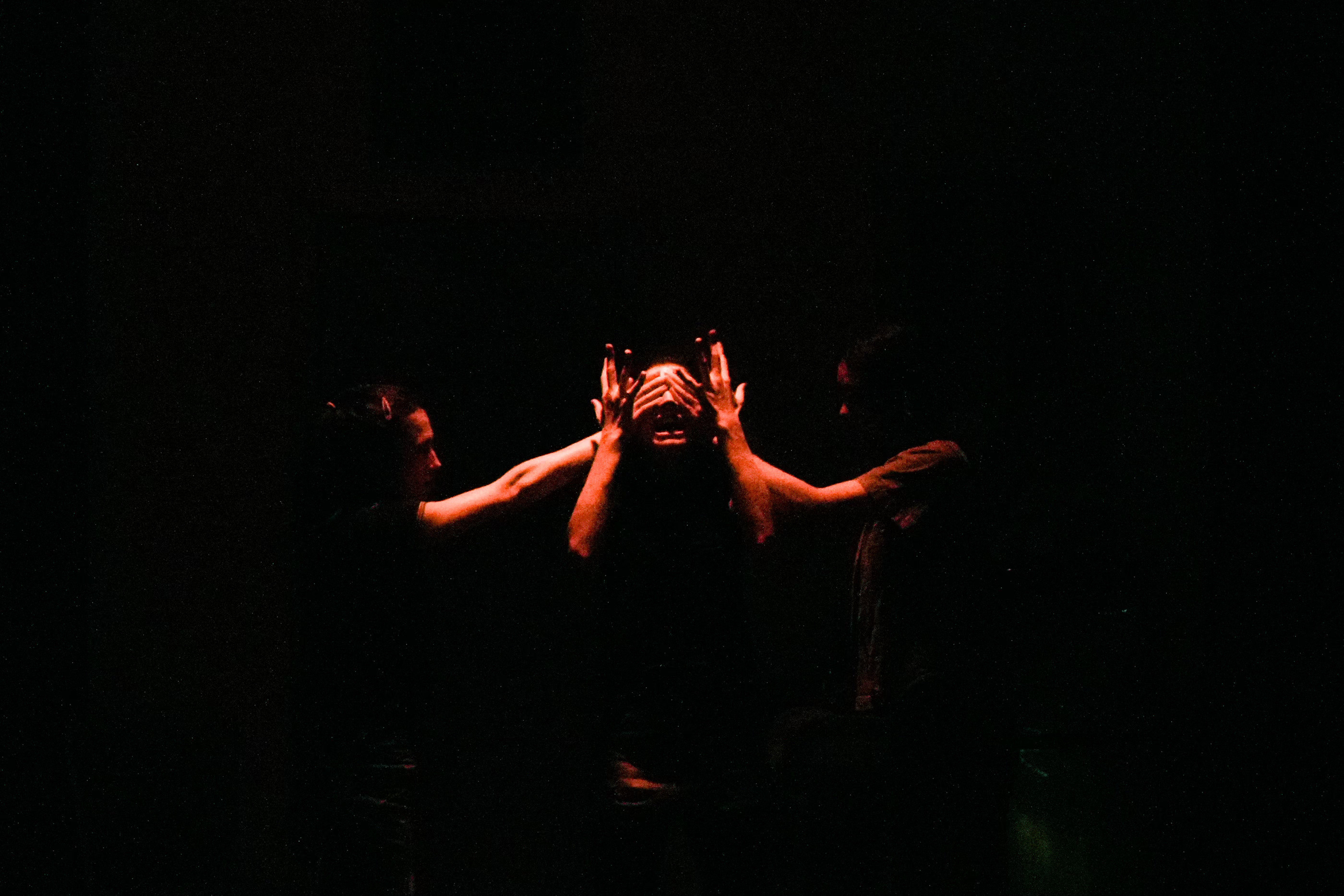
I doubt that Ibsen was on Duclos’ mind when she wrote Blood Orange, but The Wild Duck is an old take on a not dissimilar theme by one of the inventors of Naturalism, a century-and-a-half in age. It is familial love that the girl Hedwig (brilliantly played by Maaike Laanstra-Corn) needs and fears losing as the truths of her parentage emerge, and a proposal that she sacrifice the injured duck she has nursed in the attic brings the drama to a parallel end. Ibsen's duck is both more realistic and more abstract as a symbol than Duclos' Agnavis; the duck is real as described but stays so only because it remains unseen. Agnavis, stashed for most of the play in a paper bag, is a Schrödinger's cat of a symbol, a bizarre furry-winged creature alive to the girls who pray to it and dead to the rational mind; not a realistic abstraction like Ibsen's duck, but a powerful psychological reality. The Wild Duck is a tissue of secrets that enable lies that are easily and self-interestedly believed; there is something aesthetically distant—dare I say less than honest?—in a play driven by lies. In Blood Orange, nothing is truly secret, just unspoken, too terrible to say; we know why the girls are what they are. It is a scorchingly honest play; when a lie is told, it is too obvious to actually be one.
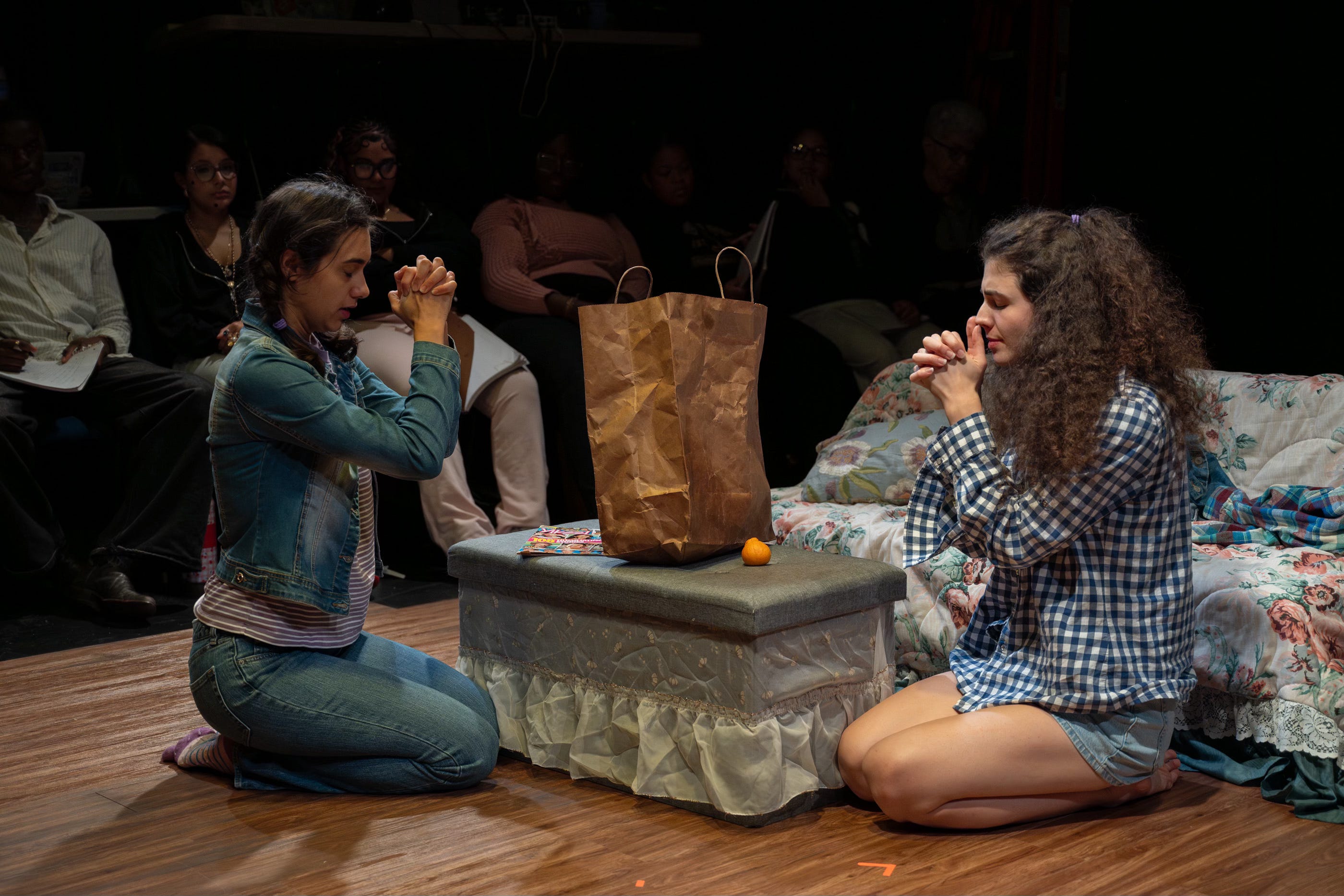
Et Alia demand, in all that they do, the intense observation of human behavior, which someone once framed as the beginning of the moral; you cannot take your eyes from what they are doing. Every moment is hung upon. Blood Orange is not Magic Realism, although oranges materialize out of nowhere; it is enchanted Naturalism, for at the root of Duclos' play and the acting of Luisa Gallati, Ana Moioli, Maria Müller, and Giorgia Valenti (the core ensemble), along with Doreen Oliver in a crucial supporting role, is a conviction that aberrant behavior is caused; it does not just happen and is not inevitable. But once caused: it happens.
If we are in a time of both spiritual yearning and the dashing of such hopes, then an adjacent viewing of The Wild Duck and Blood Orange gives pause for reflection; they speak, somehow, to the same needs and frustrations. Their differences point toward what, in the face of our yearnings, we value in the theater we choose to do, to attend, and to support. At its best, TFANA's The Wild Duck is powerful theater. Blood Orange is a sacred rite.
On top of everything else they have in common, both plays end this weekend. Go to Et Alia and TFANA, respectively, for tickets.